

Features
Dual MIDI ports
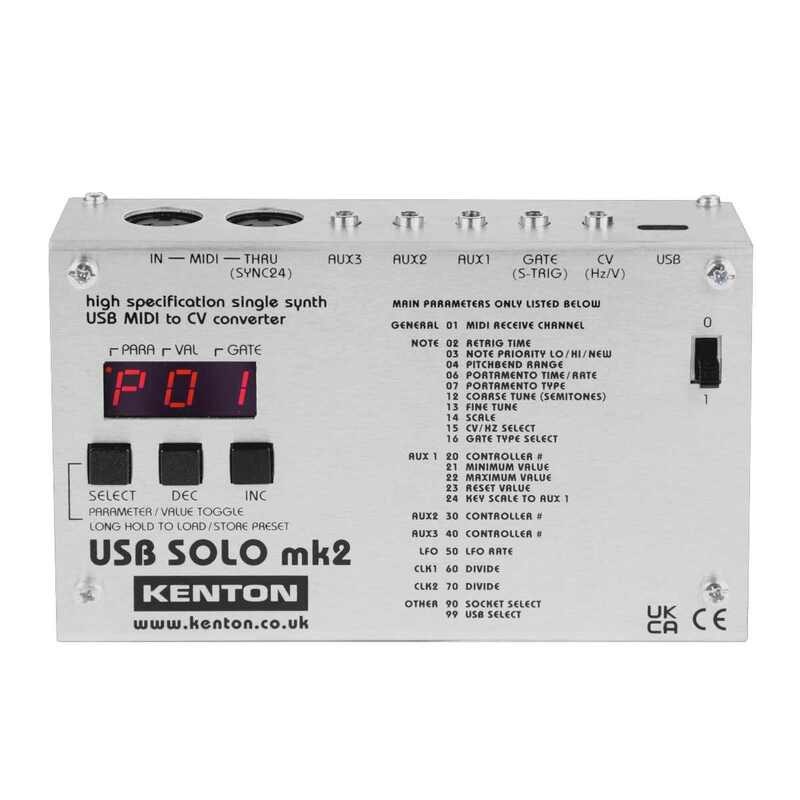
USB Solo mk2 can receive and transmit data simultaneously over USB and 5 pin DIN. It has 2 modes of operation – in standard mode it is a MIDI to CV converter; in interface mode it acts as a USB MIDI Interface as well as a MIDI to CV converter:
- Standard Mode – MIDI data received over USB and 5 pin DIN is converted to CV. MIDI data received over the the 5 pin MIDI IN is also sent to MIDI Thru.
- Interface Mode – As well as converting to CV as in Standard mode, MIDI data received over USB is sent to the 5 pin DIN MIDI Thru, and data received over the 5 pin DIN MIDI IN is sent to USB.
High specification MIDI to CV conversion
The CV outputs are driven by high specification 16 bit D/A converter for rock-steady pitches and smooth modulation. In addition to CV and Gate, there are 3 Auxiliary outputs that can be mapped to MIDI controllers so you can control filter cutoffs and other functions on your synth that have CV control.
Works with almost any CV synth
Our flexible CV/Gate configuration allows us to support just about any synth that offers CV control that you can think of:
- CV – 1 to 1.5 V/Oct or Hz/V
- Gate – 5, 10 or 15 V Gate, or S-trig with no pullup, or 5, 10 or 15 V pullup
DIN Sync / Sync 24 output
The MIDI Thru can be re-assigned as a DIN Sync / Sync 24 output running at 24 (for Roland drum machines, MC-202) or 48 ppqn (for Linn, Oberheim and some Korg drum machines), or the MIDI clock can be divided down to 1-12 ppqn.
Pitch Generation
Pitch is generated from the MIDI notes received on a specified MIDI channel.
Note priority can be set should multiple notes be received:
- New note priority
- Low note priority (lowest note currently pressed)
- High note priority (highest note currently pressed)
Pitchbend can be set at up to +-48 semitones
The LFO applied to the pitch can be controlled by:
- MIDI CCs 0 to 119
- Aftertouch
- Velocity
- Pitch Bend
Portamento can be set as follows:
- Always On
- Always Off
- Automatic
- controlled by MIDI CC 0-119
and can be applied at a fixed rate (that you can specify) or fixed time.
Auxiliary outputs
If your synthesizer has inputs for additional control voltages, such as for filter cut-off or VCA volume, these can also be controlled using the USB Solo’s three Auxiliary Outputs. Each Aux output has its own Controller, as well as a couple of special modes. Aux 1 is a special case in that keyboard scale and the LFO can be routed to it in addition to whichever Controller is selected – allowing you to, for instance, send modulation and keyboard scale to your filter cut-off.
Each aux output can be controlled by:
- MIDI CC 0-119
- Aftertouch
- Velocity
- Pitchbend
- Clock Divider 1
- Clock Divider 2
- Clock Start/Stop
- Note Trigger
- Drum Trigger
- ADSR Envelope Generator
- Auto Portamento
Clock output
Any of the Auxiliary controllers can be used as an analogue clock output using the USB Solo’s two clock dividers allowing you to work with many drum machines, arpeggiators and sequencers . The dividers can be set to 24 or 48 ppqn, or the MIDI clock can be divided down to 1-12 ppqn. In addition, the Auxiliary output 1 can be set to a clock start/stop.
Built-in LFO
The USB Solo has its own internal LFO, which can be used to modulate the CV and/or Aux 1 outputs. The amount of LFO that is sent to each of these destinations can be controlled independently, and is assignable to a variety of Controllers. By default, the LFO is routed to the CV output, providing a vibrato effect when the modulation wheel (CC 1) is used.
- LFO Rate 0.1 Hz – 100 Hz (approx)
- Triangle, sawtooth, pulse (10-50%) and Sample & Hold waveforms
- MIDI clock syncable
- Free-running, or reset on key-on
The amount of LFO sent to CV and Auxiliary output 1 can be independently controlled by:
- MIDI CC 0-119
- Aftertouch
- Velocity
- Pitchbend
Built-in ADSR Envelope Generator
The USB Solo has its own ADSR envelope generator that can be routed to any of the Auxiliary outputs. The Attack, Delay, Sustain and Decay phases can be controlled by MIDI CCs.
Note Trigger
Produces a trigger pulse when any note on the current MIDI channel is received. This is intended for some synthesizers (mainly vintage ARP models such as the 2600) which require a trigger pulse in addition to a gate signal for their envelope generators.
Drum Trigger
Produces a brief trigger pulse of a user-specifiable length whenever a particular MIDI note is received, suitable for triggering a drum synthesizer. The velocity of the note will control the level of the trigger.
Auto Portamento
When used in conjunction with out 5 socket kit for the MC-202 or 5 socket kit for the TB-303, this will automatically turn on the Roland’s own portamento when receiving legato notes.
Configuration
The USB Solo mk2 can be fully configured from the front panel or with the USB Solo Configuration Manager – see kenton.co.uk/support/apps.
Tutustu myös näihin:
-
Kenton Pro Solo Mk3
Tuotenumero 1097745€211,00/kplOsta -
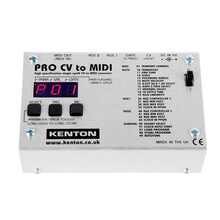
Kenton Pro CV to MIDI
Tuotenumero 1097746€227,00/kplOsta -
Kenton MIDI Thru 25
Tuotenumero 1097739€217,00/kplOsta -
Kenton Merge-8
Tuotenumero 1097731€185,00/kplOsta -
Kenton D-Sync
Tuotenumero 1097383€111,00/kplOsta -
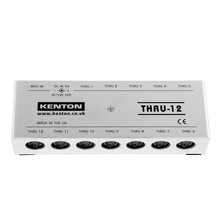
Kenton MIDI Thru 12
Tuotenumero 1097737€136,00/kplOsta -
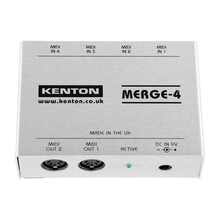
Kenton Merge-4
Tuotenumero 1097729€126,00/kplOsta -
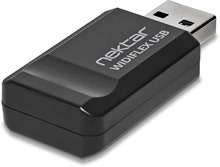
Nektar WIDIFLEX USB
Tuotenumero 1077498€60,10/kplOsta
Muut ostivat myös:
-
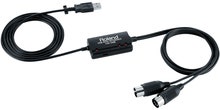
Roland UM-ONE mk2
Tuotenumero 1035929€60,00/kplOsta -

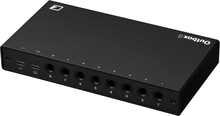
Elektron Outbox 8
Tuotenumero 1098859€309,00/kplOsta -
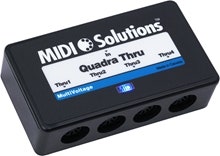
MIDI Solutions Quadra Thru V2
Tuotenumero 1042776€75,00/kplOsta -
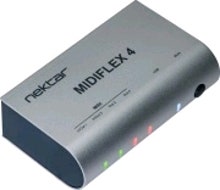
Nektar Midiflex 4
Tuotenumero 1067235€75,20/kplOsta -
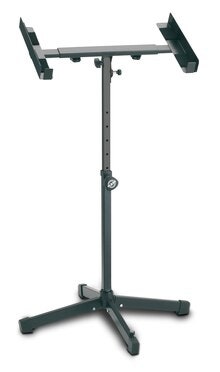
K&M 28075 Mixer Stand
Tuotenumero 1062969€177,00/kplOsta -
UDG Creator NI Maschine Studio Hardcase Black MK2
Tuotenumero 1088263€49,00Osta -

Zoom F2 Field Recorder
Tuotenumero 1074157€98,00/kplOsta -
Epiphone SG Custom Ebony
Tuotenumero 1090738€666,00Osta